Chemical
In chemical duty, pump selection is a materials compatibility exercise. Casing and elastomer are not chosen before the chemistry, the temperature and the viscosity are assessed together.
The process
Reactor emptying, intermediate transfer, dosing and filling each present different pressure and flow regimes. Within one plant, media that differ widely can still be covered by one pump family.
On resin and adhesive lines the medium tends to cure while standing, so the stop and restart regime becomes part of the selection criteria.
Fluid characteristics
- The viscosity band is wide. The same line can carry media between 10 mPa·s and 150,000 mPa·s.
- Solvents can swell elastomers, and acids can cause pitting corrosion in stainless steel.
- Some media crystallise or separate into phases as the temperature falls.
- Leakage has to stay far below the acceptable limit for environmental and occupational safety.
Where it gets difficult
- The wrong elastomer choice leads to seal failure and lost production within weeks.
- At high viscosity centrifugal efficiency falls away quickly and cavitation starts on the suction side.
- Curing media raise the breakaway torque after a stop.
The Liquilob approach
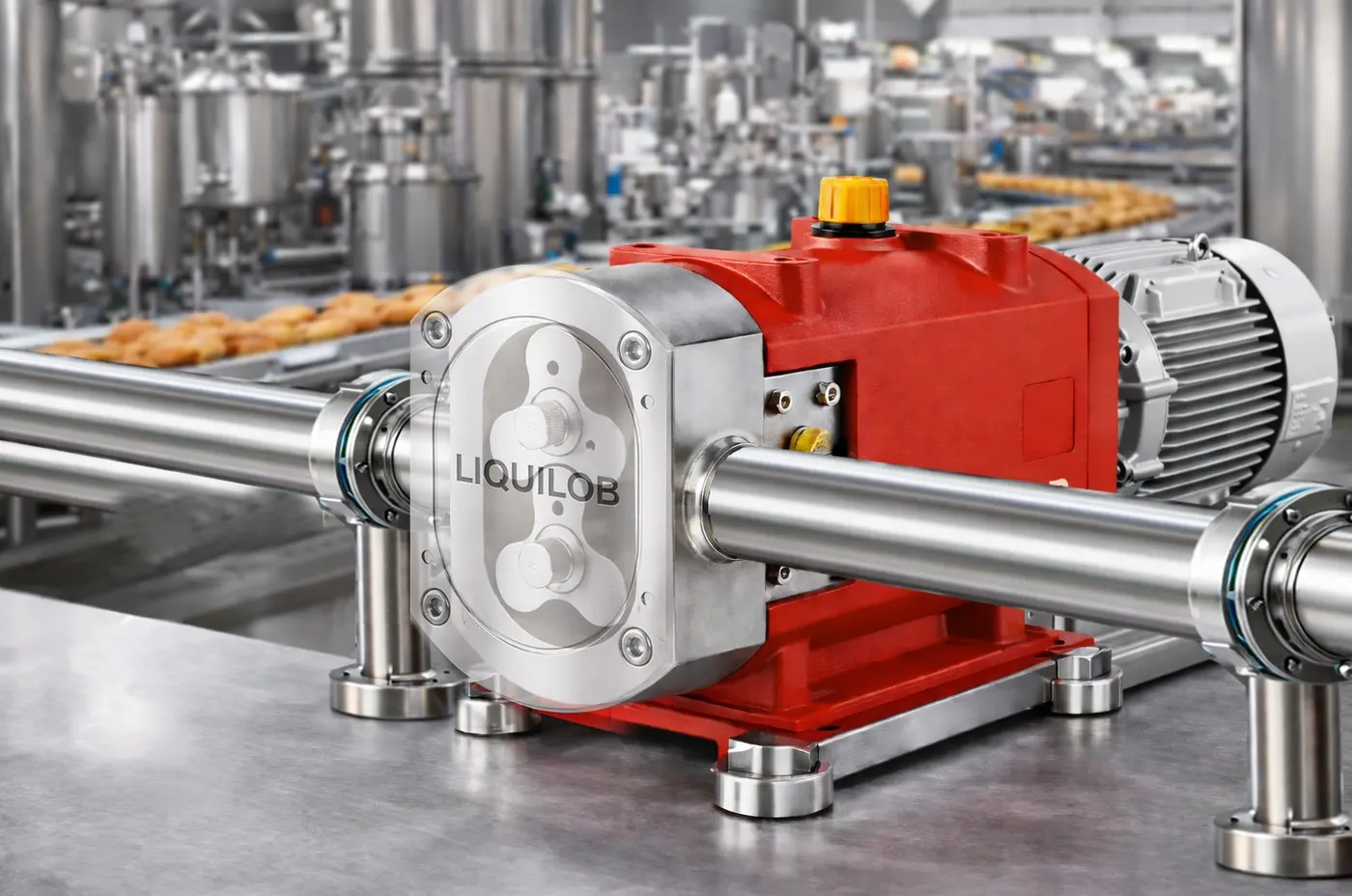
Selection starts from the compatibility table for the medium. The casing is specified as 1.4404 or a higher alloy where the duty requires it, and the elastomer as FKM or FFKM.
Where leakage is critical, a flushed double mechanical seal is used and the barrier fluid is held above process pressure so the medium cannot reach atmosphere.
The positive displacement principle does not lose efficiency as viscosity rises. Higher viscosity reduces internal slip, so volumetric efficiency improves.
Materials and hygiene
Let us determine the right pump for your application together.
Share your fluid characteristics and operating conditions, and our engineering team will help you arrive at the right Liquilob configuration.