
Wastewater & Environment
In a treatment plant the pump has one job: not to stop. Selection is made against reliability in the worst condition, not efficiency at the best point.
The process
The most common duty points are feeding the dewatering unit from the thickener outlet, digester circulation and polymer dosing.
Sludge concentration varies through the day. The pump has to keep feeding the same line when the dry solids content rises.
Fluid characteristics
- Viscosity varies across a wide band with dry solids content.
- Sludge can carry grit, fibre, plastic and metal fragments.
- Abrasive content sets the life of the wear parts.
- On digester lines, gas bubbles can interrupt the suction side.
Where it gets difficult
- Fibrous content builds up around the rotor, leading to blockage and rising torque.
- When wear reaches the casing, repair cost approaches the cost of the pump.
- Removing the pump from the line for service means an outage for the plant.
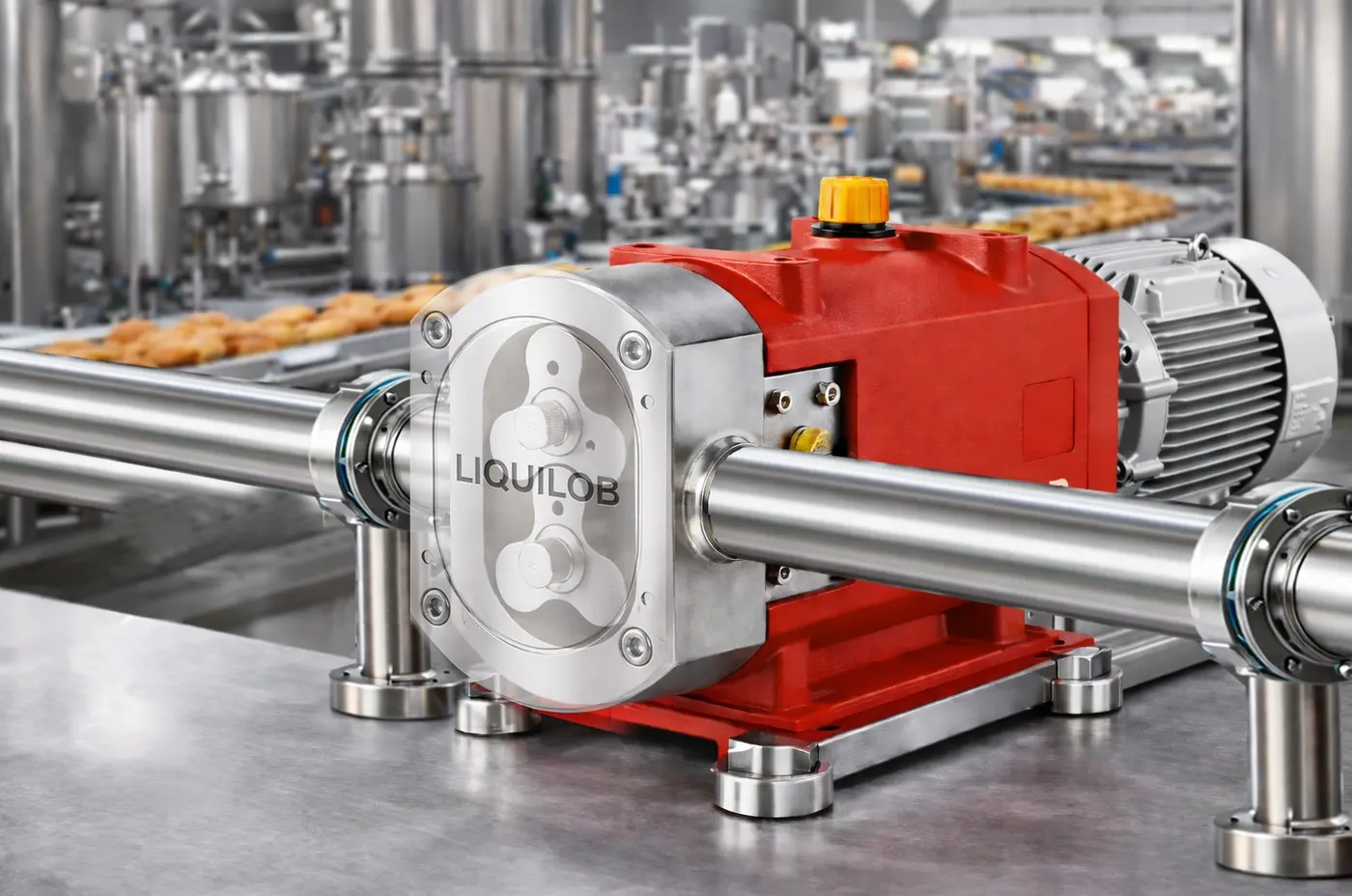
The Liquilob approach
On abrasive duties the wear plates and rotor tips are separate parts. When the wear surface is spent, those parts are replaced instead of the casing.
Rotors come out through the front cover. Because the pump stays coupled to the line and to its drive, service time is measured in minutes rather than hours.
For fibrous content a single-wing rotor and an enlarged suction port are specified. Flow demand is met with a larger frame at low speed, which lowers the wear rate directly.
Materials and hygiene
Let us determine the right pump for your application together.
Share your fluid characteristics and operating conditions, and our engineering team will help you arrive at the right Liquilob configuration.